Sisters of the Precious Blood Work Annex: Difference between revisions
Cthtmw1701 (talk | contribs) |
Cthtmw1701 (talk | contribs) |
||
| Line 30: | Line 30: | ||
== The Work Annex == | == The Work Annex == | ||
The annex was originally used by the Sisters of the Precious Blood as a workspace where the nuns engaged in weaving, hat-making, and other forms of handiwork. In 1916, the annex was closed and sold to the William Rieman family. It was later acquired by John and Clara Langhals, along with the adjoining farmland. | The annex was originally used by the Sisters of the Precious Blood as a workspace where the nuns engaged in weaving, hat-making, and other forms of handiwork. In 1916, the annex was closed and sold to the William Rieman family. It was later acquired by John and Clara Langhals, along with the adjoining farmland. | ||
== The Cemetery == | |||
On the farmland was a cemetery that once served as the burial ground for local members of the Society of the Precious Blood. John Langhals sought and received permission from the Catholic Church to close the cemetery and repurpose the land for farming. The church granted approval on the condition that at least one bone from each grave be relocated to another cemetery. | |||
According to the couple’s daughter, Theresa Lammers Rosengarten, a rosary attached to one of the exhumed bones was brought into the Langhals home. After that, unexplained occurrences reportedly began. Doors would open and close on their own, curtains moved without any apparent cause, and rustling sounds—like someone walking through the hall—could often be heard. | |||
== Reported Phenomena == | == Reported Phenomena == | ||
Revision as of 04:51, 15 July 2025

Sisters of the Precious Blood Work Annex
Overview
The Sisters of the Precious Blood Work Annex in Glandorf, Ohio, is reportedly haunted by the spirit of a nun whose remains were once buried on the property. The house was previously used as a convent, and local legend holds that paranormal activity began after graves were relocated and a rosary was removed from one of the exhumed bodies.
Location
- Address: 147 Church Street
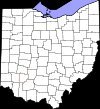
- City/County: Glandorf / Putnam County
- Public Access: No; this appears to be a private residence now
Haunting / Legend Summary
The primary haunting associated with the Glandorf House involves the ghost of a nun. Witnesses have reported hearing rustling sounds, doorknobs being turned, and scratching on doors. It is believed that the activity may be linked to the disturbance of graves once located on the property. According to the legend, when the graves were moved, a rosary was found and kept by the property owner. Some speculate the nun may be searching for this lost item.
Historical Background
- Construction date: 1892
- Original purpose: A work annex for an existing convent
- Notable events:
- Property formerly used as a work annex for a convent
- Graves located on the site were reportedly moved
- A rosary was found during exhumation and kept by the farmer
- Key timeline moments:
- Undated – Property served as a convent
- 1916 - the work annex is closed and the property is sold to the William Rieman family
- Undated - the property is sold to John and Clara Langhals
- As of 2007, the property was still in the possession of the Langhals family, notably Kim Langhals (daughter-in-law)
- Undated – Graves were moved and activity reportedly began
The Work Annex
The annex was originally used by the Sisters of the Precious Blood as a workspace where the nuns engaged in weaving, hat-making, and other forms of handiwork. In 1916, the annex was closed and sold to the William Rieman family. It was later acquired by John and Clara Langhals, along with the adjoining farmland.
The Cemetery
On the farmland was a cemetery that once served as the burial ground for local members of the Society of the Precious Blood. John Langhals sought and received permission from the Catholic Church to close the cemetery and repurpose the land for farming. The church granted approval on the condition that at least one bone from each grave be relocated to another cemetery.
According to the couple’s daughter, Theresa Lammers Rosengarten, a rosary attached to one of the exhumed bones was brought into the Langhals home. After that, unexplained occurrences reportedly began. Doors would open and close on their own, curtains moved without any apparent cause, and rustling sounds—like someone walking through the hall—could often be heard.
Reported Phenomena
- Apparitions: Ghostly nun
- Cold Spots: N/A
- Voices/EVPs: N/A
- Physical Touches: N/A
- Object Movement: Doorknobs turning by unseen hands
- Malfunctions: N/A
- Poltergeist Activity: Scratching noises on doors
- Shadow Figures: N/A
- Time Anomalies: N/A
Skepticism & Alternative Explanations
Possible natural explanations for the reported activity include:
- Settling of the old structure causing creaking and scratching noises
- Rodents or small animals in walls may be responsible for scratching sounds
- Drafts or pressure changes can cause doorknobs to rattle or move slightly
The psychological influence of knowing the property was once a convent and burial ground may also contribute to perceptions of a haunting. Confirmation bias and suggestion could play roles in the interpretation of normal environmental sounds as paranormal.
Visitor Information
- Visiting Hours: Not open to the public
- Fees or Costs: N/A
- Contact Info: Unknown
- Warnings/Restrictions: Private property; trespassing is not permitted
Citations / References
- Chris Woodyard, Haunted Ohio IV
- Dave Westrick, "The Legend of Restless John and Other Ghost Stories", Putnam County Sentinel, 29 Oct. 1980
- Dave Westrick, "Spirits of the Past Abound in Franconia Cemetery", Putnam County Sentinel, 28 Oct. 1981
- The Lima News, “A Match Made in Heaven”, August 3, 1996
- The Lima News, “Book honors lives of anonymous service”, June 10, 2001
- The Lima News, “Searching for scientific evidence of a ghost”, October 31, 2007